בס״ד
Jewish Israeli Center New Haven Shabbat Parshat Chukat-Balak
 

Dear Friends,

This week I met with a young couple preparing for their wedding. As we discussed the ketubah, I explained that the groom accepts the responsibility to care for his wife. Smiling, the groom asked, “And what does the bride commit to give me?” I laughed and replied that the ketubah is entirely about the groom’s obligations—but the truth is that the bride has a unique and equally important mission.

The Torah entrusts every Jewish woman with three mitzvot that form the foundation of the Jewish home: lighting Shabbat candles, keeping a kosher kitchen, and Taharat Hamishpachah (Family Purity). From a very young age, a Jewish girl begins lighting a Shabbat candle, following the Rebbe’s encouragement that every girl from the age of three light one candle each Friday afternoon, adding a second candle after she marries. As she grows older, she becomes involved in keeping a kosher kitchen, and when she establishes her own home, she takes on the beautiful mitzvah of Family Purity. Just as the groom accepts significant responsibilities toward his bride, the bride accepts the spiritual responsibility for the foundations of their Jewish home.

In this week's Parshah, Chukat, we read that immediately after Miriam's passing, the water disappeared. Rashi explains that throughout the forty years in the desert, the Jewish people had water in Miriam's merit. The Rebbe adds a beautiful insight: Miriam's well was not only a source of drinking water—it also served as the mikvah, enabling the Jewish women to observe the mitzvah of Family Purity throughout their years in the wilderness.

Moshe and Aharon are similarly connected to the other two mitzvot. The manna that fell in Moshe's merit provided the nation's food and symbolizes the kosher Jewish kitchen, while Aharon's daily kindling of the Menorah continues to illuminate every Jewish home through the mitzvah of lighting Shabbat candles.

It is fascinating that every Jewish community seems to have one mitzvah for which it is especially known. In Israel, lighting Shabbat candles is remarkably widespread, with many Jews observing this beautiful mitzvah even if they are not otherwise religious. Here in the United States, however, we have a wonderful opportunity to spread even more light by encouraging this special mitzvah.

This week we also celebrate Yud-Beis Tammuz – the Festival of Liberation, commemorating the release of the Previous Lubavitcher Rebbe from Soviet imprisonment. He taught that true freedom is expressed by strengthening our commitment to Torah and mitzvot and bringing more light and holiness into the world.

May we all take upon ourselves this Shabbat to add another light—whether by lighting Shabbat candles ourselves or by encouraging another Jewish woman or girl to do so. In this merit, may we hasten the coming of the ultimate Redemption.
Shabbat Shalom!

Rabbi Eli and Rochel Raskin


מקווה במדבר?

השבוע שוחחתי עם זוג צעיר שעמד להינשא. תוך כדי שיחה על הכתובה הסברתי להם שהחתן מתחייב לדאוג לכל צורכי אשתו. לשמע הדברים חייך החתן ושאל: "ומה הכלה מתחייבת לתת לי?" השבתי בחיוך שהכתובה כולה עוסקת בהתחייבויותיו של החתן... אבל האמת היא שגם לכלה יש תפקיד מיוחד.

התורה הפקידה בידי האישה את האחריות על שלוש מצוות שהן יסודות הבית היהודי: הדלקת נרות שבת, כשרות וטהרת המשפחה. כבר מגיל צעיר מתחילה הילדה להדליק נר שבת, כפי שהרבי הנהיג שכל ילדה מגיל שלוש תדליק נר אחד, וכשתינשא תוסיף את הנר השני. בהמשך היא לומדת את הלכות הכשרות ומסייעת בבניית מטבח יהודי כשר, וכאשר היא מקימה בית בישראל היא זוכה לקיים גם את מצוות טהרת המשפחה. נמצא שכמו שהחתן מקבל על עצמו התחייבויות גדולות כלפי כלתו, כך גם הכלה מקבלת על עצמה את האחריות הרוחנית ליסודות הבית היהודי.

בפרשת חוקת אנו קוראים שלאחר פטירת מרים פסקו המים. רש"י מסביר שכל ארבעים שנות הנדודים במדבר זכו בני ישראל לבאר בזכותה של מרים. הרבי מוסיף רעיון נפלא: בארה של מרים לא שימשה רק לשתייה, אלא גם כמקווה, שאִפשר לנשות ישראל לשמור על מצוות טהרת המשפחה לאורך כל שנות המדבר.

גם משה ואהרן קשורים לשתי המצוות האחרות. המן שירד בזכות משה סיפק את מזונם של בני ישראל ומסמל את הכשרות והמטבח היהודי, ואילו אהרן הכהן, שהדליק מדי יום את מנורת המקדש, ממשיך להאיר בכל בית יהודי באמצעות מצוות הדלקת נרות שבת.

מעניין לראות שלכל קהילה יהודית יש מצווה שבה היא "זהירה טפי". בארץ ישראל, הדלקת נרות שבת היא אחת המצוות הנפוצות ביותר, וגם יהודים רבים שאינם שומרי תורה ומצוות מקפידים להדליק נרות לכבוד שבת. דווקא כאן בארצות הברית יש לנו הזדמנות מיוחדת להוסיף עוד אור ועוד קדושה לבתינו.

השבוע אנו מציינים גם את י"ב בתמוז – חג הגאולה, יום שחרורו של הרבי הריי"צ, שלימד שהדרך האמיתית לחגוג את החירות היא להוסיף עוד מצווה, עוד אור ועוד קדושה בעולם.

נקבל על עצמנו השבת להוסיף באור השבת – להדליק נרות, לעודד עוד אישה או ילדה להצטרף למצווה היקרה הזו, ובכך לקרב עוד צעד את הגאולה השלמה.

שבת שלום וחג גאולה שמח!

הרב אלי ורחל רסקין

 
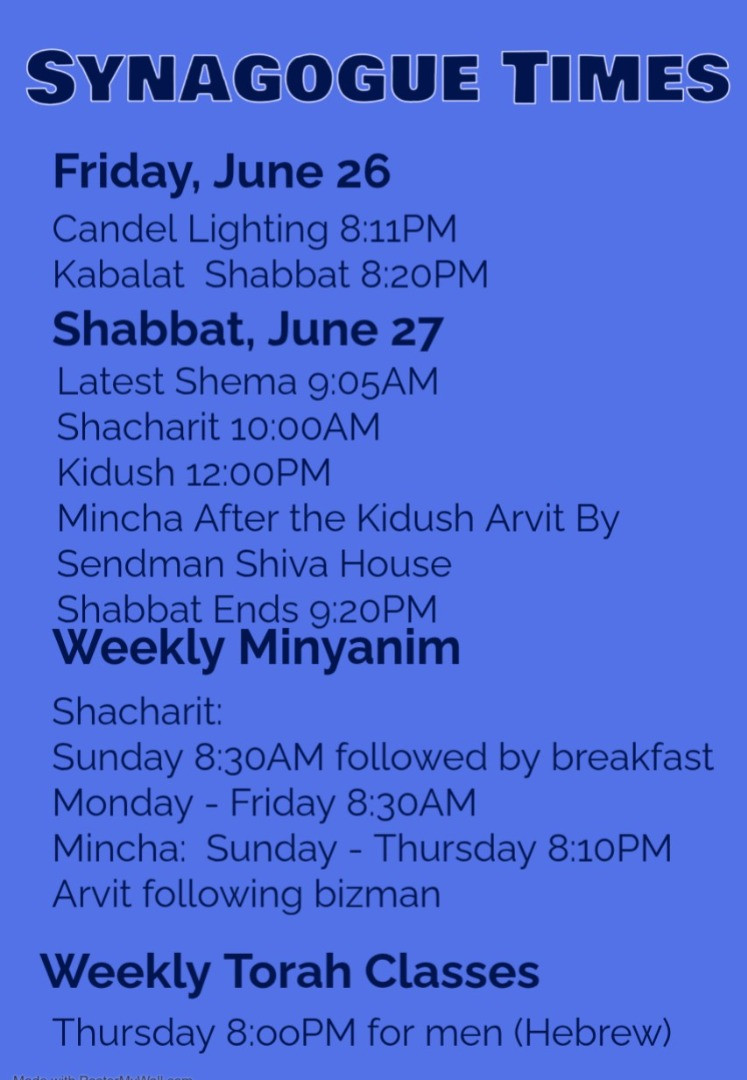
Kiddush and Shabbat Schedule

This week's kiddush is sponsored by:

  •  Ari And Leah Caroline
  • Menachem and Shayna Segal
  • Eliyahu Ganour
  • Itay and Zoey Mizrachi
  • Yosef Horrowitz 
  • In honor of 12 Tamuz and in memory of Yosef Tzvi Ben Yisroel OB"M

Please contact us to join our weekly minyanim, Torah classes or to sponsor a kiddush.

CONTACT TO SPONSOR
 
JIC New Home

Boruch Hashem we moved into our new beautiful location on Whalley Avenue thanks to a wonderful group of donors. However, we need help finishing the renovation on the large property which includes a beautiful sanctuary, a dedicated children's section, and four guest suites on the top floors for people who are visiting and don't have places to stay. To help us raise the $360,000 we need, please click the following link and share it with anyone you feel could help. Thank you!

BUILDING FUND

Unsubscribe

 Facebook  Web  Instagram